Mohave County Breakthrough in Drug and Firearm Trafficking Results in Fifteen Arrests
A Closer Look at a High-Stakes Law Enforcement Operation
The recent multi-agency undercover operation in Mohave County has sparked considerable conversation about the legal system’s ability to tackle drug and firearm trafficking. This operation, known as “Operation Mohave Typewriter,” has drawn attention not only from local communities but also from legal experts who are taking a closer look at the tangled issues, tricky parts, and nerve-racking challenges that law enforcement faces on a daily basis.
This opinion editorial aims to dig into the details of the operation, discuss its implications for our legal framework, and explore how a diverse group of agencies managed to figure a path through this complicated event. By reviewing both the successes and the problematic aspects of the bust, we can better understand how law enforcement navigates the twists and turns of tackling serious crimes in a modern, interconnected world.
Breaking Down the Operation: The Multi-Agency Collaboration
One of the key aspects of the Mohave County bust was the cooperation between numerous federal and local agencies. Special Agents from the Bureau of Alcohol, Tobacco, Firearms and Explosives (ATF), officials from the Drug Enforcement Administration (DEA), and detectives from the Mohave Area General Narcotics Enforcement Team (M.A.G.N.E.T.) all played integral roles in the undercover operation. This collaborative approach is a prime example of how law enforcement agencies combine their resources to work through challenging and intimidating cases that are loaded with issues.
Coordinating Efforts Across Agencies
Successful collaboration in such operations is far from simple. It involves:
- Establishing clear communication channels
- Defining roles and responsibilities
- Sharing intelligence data quickly and securely
- Synchronizing efforts in real time to intercept criminal activity
Each agency brought its own expertise to the table—while the ATF focused on the complexities of firearm trafficking, the DEA managed the drug-related elements of the case, and local detectives ensured that community safety was not compromised. Working together in this way exemplifies how agencies can combine their efforts when faced with intimidating tasks that require working through complicated pieces of criminal behavior.
The Role of Undercover Operations in Combating Crime
Undercover investigations are a critical tool for law enforcement but are not without their challenges. They require agents to get into environments filled with hidden complexities and nerve-racking dangers. The nature of undercover work means that officers have to figure a path through situations riddled with tension while gathering evidence that is both reliable and legally admissible.
This operation, in particular, was an exercise in managing your way through the subtle details of criminal networks. Although undercover agents expose themselves to unpredictable risks, they often provide some of the most critical leads in cases involving organized crime, making such work absolutely essential for making communities safer.
Understanding the Scale of the Bust
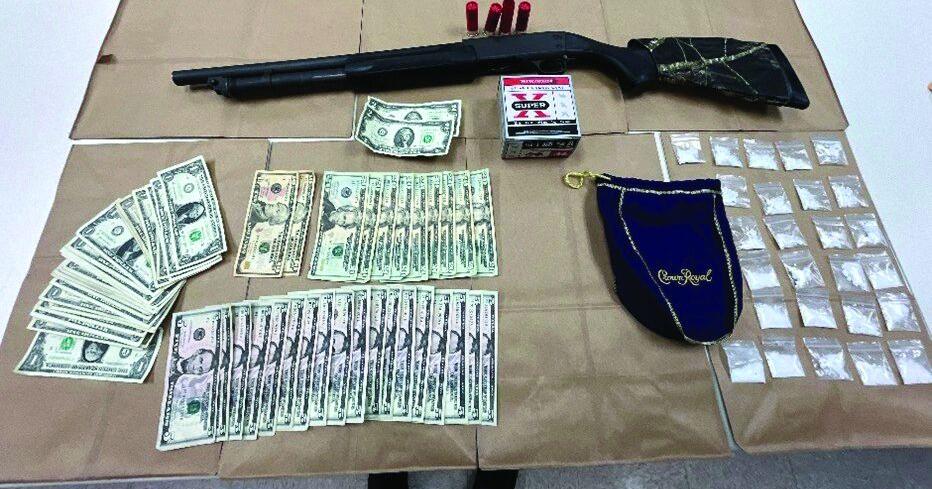
The magnitude of “Operation Mohave Typewriter” cannot be underestimated. With 15 individuals arrested and a significant seizure of illegal narcotics and weapons, the bust demonstrates the extent of criminal networks operating in the region. The operation led to the discovery of:
- Approximately 32.5 pounds of methamphetamine
- One gram of powder fentanyl
- Multiple firearms, including fully automatic ones and ghost guns
- 40mm grenades and other explosive devices
This list not only highlights the types of contraband involved but also underscores the scary and overwhelming challenges that law enforcement must face in cracking down on such threats. Each piece of the seizure represents a small twist or complicated piece in the larger puzzle of criminal trafficking.
Details of the Arrests
The individuals arrested during the operation have faced a range of charges related to weapon possession, drug trafficking, theft, and other violent crimes. To provide a clearer picture of the legal claims, consider the following table summarizing key details:
| Name | Age & Residence | Charges |
|---|---|---|
| David Alan Baker | 51, Golden Valley | Weapon possession by a prohibited person (2 counts), 1st-degree trafficking in stolen property (2 counts) |
| David James Daniels | 58, Golden Valley | Weapon possession by a prohibited person (3 counts), 1st-degree trafficking in stolen property, narcotic drug possession |
| Joan Louise Lapointe | 63, Kingman | Sale and transportation of dangerous drugs |
| Mathew Montijo | 50, Kingman | Selling prohibited weapons and weapon-related misconduct (3 counts) |
| Richard Damon Eldridge | 44, Chloride | Multiple counts of weapon misconduct, drug sale, and transport |
| Richard Ryan Hanson | 53, Golden Valley | Weapon possession, 1st-degree trafficking of stolen property, and burglary |
| Rosemary Ann Gomez | 39, Chloride | Firearm misconduct, drug sale and transportation, promotion of prison contraband, and dangerous drug possession |
| Other Arrests | Various ages and regional backgrounds | Charges including drug transportation, burglary, parole violations, and probation violations |
This summary illustrates the breadth and depth of the charges and helps underline the multi-dimensional nature of the law enforcement effort. In cases like this, the legal system must work through a range of charges, each with its own legal twists and turns, to ensure that justice is served.
Legal Implications and the Broader Impact on Community Safety
The Mohave County operation raises several key points from a legal perspective. Given the nerve-wracking complexity of the criminal behavior involved, legislators and law enforcement officials are forced to take a closer look at how legal frameworks tackle both new and traditional methods of trafficking.
Adapting Legislation to Modern Criminal Networks
Modern criminal operations have a way of sneaking through the traditional boundaries of law. This bust reveals how outdated or insufficient laws can sometimes make it difficult for agencies to manage your way through the more subtle parts and fine points of criminal enterprises. As criminals use technology and innovative methods to avoid detection, it becomes super important for lawmakers to update legislation in order to close loopholes and adapt to these challenging conditions.
Key considerations include:
- Improving inter-agency communication protocols
- Updating legal definitions around weapon classification, including ghost guns and unserialized firearms
- Expanding the scope of undercover operations to stay ahead of traffickers
- Enhancing penalties for trafficking charges to serve as an effective deterrent
Community Confidence in the Legal Process
When large-scale operations of this nature unravel, they send out mixed signals to the public. On one hand, they offer reassurance that law enforcement is actively combating crime. On the other, frequent reports of such cases can make community members feel overwhelmed and even anxious about their own safety.
It’s important to note that public opinion is often divided in these situations. While some view such busts as effective means to protect communities, others may see them as a sign of a larger systemic problem—one that requires not only immediate law enforcement action but also long-term legislative and community strategies to really make an impact.
Challenges in Bringing Criminals to Justice
Beyond the immediate triumph of arrests and seizures, operations like these bring to light numerous legal and procedural challenges that agencies must sort out. These challenges can be understood by exploring several areas where the system has to manage its way through complicated pieces of evidence and testimony.
Dealing with Complex Evidence
One of the trickier parts of any criminal investigation is gathering and presenting evidence that stands up in court. When undercover agents are involved, the chain of custody for evidence becomes loaded with potential pitfalls. Evidence must be collected, stored, and presented in a manner that leaves little room for challenge from defense attorneys.
Some of the confusing bits include:
- Ensuring that the covert nature of the evidence does not compromise its integrity
- Collecting forensic data from controlled environments where secrecy is paramount
- Coordinating evidence across multiple agencies, each with its own protocols
For law enforcement, these issues are not just administrative; they are on edge matters that can determine whether prosecutions succeed or fail. Hence, every step from surveillance to arrest must be meticulously planned and executed.
Legal Complexities in Prosecuting Multiple Charges
Another tangled issue arises when individuals face multiple charges at once. Prosecutors must decide whether to pursue each offense separately or bundle charges together. Decisions in this regard are influenced by:
- The reliability of the gathered evidence
- The chronology of events observed during the bust
- The legal precedents that might affect sentencing
- The overall strategy to secure a conviction
These choices require legal teams to take a closer look at the fine details, weigh slight differences in evidence, and ultimately determine the best course forward. When multiple defendants and multiple charges are involved, the courtroom becomes a battleground of legal strategies aimed at either mitigating or maximizing penalties.
Community Perspectives and the Role of Public Safety
The impact of large-scale busts extends far beyond the confines of the courtroom. Local communities are often left to grapple with mixed emotions and varied opinions regarding the way crimes are perpetrated and enforced.
Mixed Reactions: Reassurance vs. Anxiety
The arrest of 15 individuals connected to dangerous criminal activities certainly brings relief to those who suffer from the resulting community tension. However, it also raises concerns about how deep the criminal networks run. For residents, the operation can sometimes feel like a double-edged sword: a sign of effective intervention on one hand, and a reminder of the overwhelming and intimidating nature of modern criminality on the other.
Community dialogue often revolves around topics such as:
- The efficacy of undercover operations in preventing future crimes
- The need for clearer communication between law enforcement and local residents
- The pressure on governments to introduce stronger, more adaptive laws
This mixed reaction is critical in a democratic society where public support for law enforcement often depends on transparency and accountability. Ensuring that communities remain informed about the nature of these operations is a key element in maintaining trust between citizens and the authorities.
Strengthening Community Relations Post-Bust
After high-profile operations like this, it is essential for local government and law enforcement to work together in rebuilding community confidence. Some steps to take include:
- Public forums and town hall meetings where residents can voice concerns and ask questions
- Improved outreach programs that educate the public on how undercover operations work
- Transparency in reporting results and follow-up measures taken after the bust
- Collaborative efforts with community leaders to address underlying issues contributing to crime
Such initiatives are not only about reassuring the public, but also about formulating long-term strategies that prevent crimes from taking root in the first place. A community that is well-informed and engaged becomes a super important ally to law enforcement.
Examining the Broader Legal Landscape
The Mohave County bust is a microcosm of a larger debate within the legal community about how best to manage modern criminal behavior. The evolution of crime often forces lawmakers to work through a maze of outdated statutes and tangled issues to catch up with criminals who use innovative methods to stay ahead of the law.
From Traditional Crime-Fighting to Modern Challenges
Historically, legal systems were structured to handle conventional crimes. However, the modern era has brought with it new and intimidating challenges that require a fundamental rethinking of legal strategies. For example:
- Criminals now exploit digital platforms and advanced technology to coordinate their activities
- New types of weapons, such as ghost guns, present legal loopholes that were previously unimagined
- Multi-agency operations create unique challenges in bridging diverse protocols and legal frameworks
In response, legislators must continuously work on revising laws so that they remain both relevant and enforceable. This process requires not only legislative acumen but also a willingness to take calculated risks and embrace innovative solutions.
The Impact of Legal Reforms on Future Operations
The recent bust may well serve as a catalyst for future legal reforms. Some potential areas for reform include:
- Clearer definitions regarding the classification of illegal weapons and contraband
- Streamlined protocols for inter-agency operations, ensuring that evidence collection and sharing are as efficient as possible
- Enhanced penalties for drug and firearm trafficking that serve as a strong deterrent against future offenses
- Greater emphasis on protecting the rights of defendants while balancing the needs of public safety
Legal experts agree that if the system can manage your way through these tricky parts and tangled issues, then future operations could benefit from improved collaboration and stronger prosecutorial frameworks. The goal is to create a legal environment where progress is continuous and delays or outdated rules no longer stand in the way of justice.
Lessons Learned and Future Considerations
The extensive operation in Mohave County has provided a wealth of lessons for the legal community and law enforcement agencies alike. Reflecting on these lessons can help ensure that future engagements are even more effective and that the legal system remains robust in the face of evolving threats.
Key Takeaways for Law Enforcement
Some of the critical insights drawn from this operation include:
- Importance of Coordination: Success in cases like these hinges on clear and efficient communication among all involved agencies.
- Adaptability: Criminals are constantly refining their methods, and law enforcement must be equally innovative while avoiding pitfall tactics that could compromise covert operations.
- Evidence Management: With multiple charges and varied forms of evidence at play, maintaining the integrity and proper documentation of each piece of evidence is super important.
- Community Engagement: Keeping the local population informed and involved creates an environment where trust between citizens and law enforcement can flourish.
Policy Recommendations for Future Initiatives
Based on the events in Mohave County, several policy recommendations emerge:
- Legislative bodies need to work on updating laws that address new methods of trafficking and weapon manufacturing.
- Agencies should consider establishing permanent task forces tasked with bridging the gaps in communication and process between local and federal units.
- Investment in advanced training for undercover officers is key to ensuring they are prepared to deal with nerve-racking and unpredictable situations.
- Developing clearer guidelines for the collection and handling of illicit evidence can help mitigate legal challenges during prosecution.
- Strengthening partnerships with community leaders and local organizations so that law enforcement strategies are informed by public feedback, creating more trust and cooperation.
Legal and Societal Implications: A Balancing Act
Every major law enforcement operation has consequences that ripple through both the legal system and the community at large. The Mohave County bust is no exception, as it forces society to grapple with the delicate balance between maintaining public safety and upholding individual rights.
Protecting Civil Liberties While Pursuing Justice
The law must be applied fairly—even when dealing with criminals operating on the edge of tension and unpredictability. In high-profile cases, particularly those that involve covert investigations, ensuring that civil liberties are respected is a tricky part of the process. Enforcement agencies must carefully figure a path through the legal requirements of evidence collection, balancing the need for swift action with the right to a fair trial.
Key considerations in protecting civil liberties include:
- Ensuring that undercover operations have appropriate oversight to guard against abuse of power
- Maintaining transparency with the public where possible to build trust, without compromising sensitive investigative techniques
- Providing defendants with fair legal representation and an unbiased judicial process
- Striking a balance between the urgency of criminal prosecutions and the due process rights enshrined in law
Societal Lessons: What This Bust Teaches Us
From a broader perspective, this operation teaches us that the fight against crime is never black and white. It is a continuous effort that requires constant adjustments, both on the front lines and in legal precedents. The challenges are many—a mix of overwhelming logistical issues, subtle legal twists, and community expectations that can sometimes be off-putting or even nerve-racking.
Society must be willing to engage in that ongoing discussion regarding crime prevention and legal reform. Whether through public forums, legislative hearings, or community outreach, the ripple effects of such operations echo in many aspects of our daily lives.
Reflections on the Future of Law Enforcement Operations
Looking ahead, it is clear that large-scale operations like “Operation Mohave Typewriter” will continue to be a focal point in debates over crime and punishment. The successes and shortcomings of this operation provide valuable insights for designing future actions against drug and firearm trafficking—and indeed, any criminal network that exploits modern vulnerabilities.
Embracing Technology While Maintaining Accountability
Technology plays a dual role in modern criminal investigations. On one side, it provides criminals with sophisticated tools to hide their activities and lay low. On the other, it equips law enforcement with innovative investigative techniques. Balancing these aspects is one of the fine shades of current legal challenges.
Future initiatives should focus on:
- Combining traditional undercover methods with cutting-edge data analysis and surveillance technologies
- Implementing robust digital forensic capabilities that can process large volumes of evidence quickly and reliably
- Ensuring that technological advances do not compromise the rights of individuals involved in investigations
- Training law enforcement personnel to stay current with both the latest technology and the corresponding legal frameworks
Building a Resilient Legal Framework for Future Challenges
As criminal methodologies evolve, so must the laws that govern how justice is delivered. Lawmakers are tasked with the super important goal of drafting legislation that is both adaptive and robust. This means not only closing existing gaps that allow criminals to slip through but also anticipating new trends that have yet to fully manifest.
Future legal reforms should aim to:
- Expand the legal definitions to cover emerging forms of weaponry and digital crimes
- Facilitate better data sharing between agencies through standardized protocols
- Provide guidelines for handling evidence gathered from increasingly sophisticated criminal networks
- Incorporate public input as an essential element in the development of more transparent legal policies
Conclusion: A Path Forward Amid Challenging Times
The Mohave County bust of 15 individuals involved in drug and firearm trafficking stands as an important case study highlighting both the success of multi-agency cooperation and the intimidating challenges that lie ahead. This operation, with all its tricky parts, tangled issues, and overwhelming, nerve-racking moments, underscores the need for legal experts, law enforcement, and community leaders to work together in a constantly changing landscape.
As we take a closer look at this operation and its implications, it becomes clear that future success depends on three key elements:
- Effective inter-agency cooperation that leverages the unique strengths of each organization
- A nimble and adaptable legal framework that can keep pace with modern criminal tactics
- Ongoing community engagement and transparency to foster trust and mutual support
By addressing these super important areas, we can hope to create a legal environment that is not only robust in the face of current challenges but is also flexible enough to adapt to the future. The fine points of criminal law are in constant flux, and navigating them requires the collective effort of policymakers, law enforcement, and the very communities they are sworn to protect.
Ultimately, while the operation in Mohave County may have ended with a series of arrests and seizures, its legal and societal repercussions will be felt for years to come. It offers a reminder that progress in crime prevention isn’t achieved simply by enforcing existing laws; it requires a continuous, collaborative effort to update and refine those laws in response to the ever-evolving twists and turns of criminal behavior.
As we move forward, the lessons gleaned from this operation will undoubtedly shape future strategies and ultimately help in making our communities safer. Working through the tangled issues and tricky parts of complex criminal networks is both a challenging and necessary endeavor, and it is one that demands both vigilance and innovation from our legal system.
In the end, maintaining public trust in the legal system relies on our collective willingness to tackle these challenges head-on—finding our way through the subtle details, sorting out the small distinctions between evidence, and ensuring that while criminals may change their tactics, the ultimate pursuit of justice remains unwavering and resolute.
Originally Post From https://gcmaz.com/kaff_news/drug-and-firearm-trafficking-bust-in-mohave-county-lead-to-15-arrests/
Read more about this topic at
3 nabbed in undercover sex trafficking, exploitation …
10 people arrested in Twin Cities sex trafficking sting, 3 …