Supreme Court Decision Redefines the Future of Birthright Citizenship
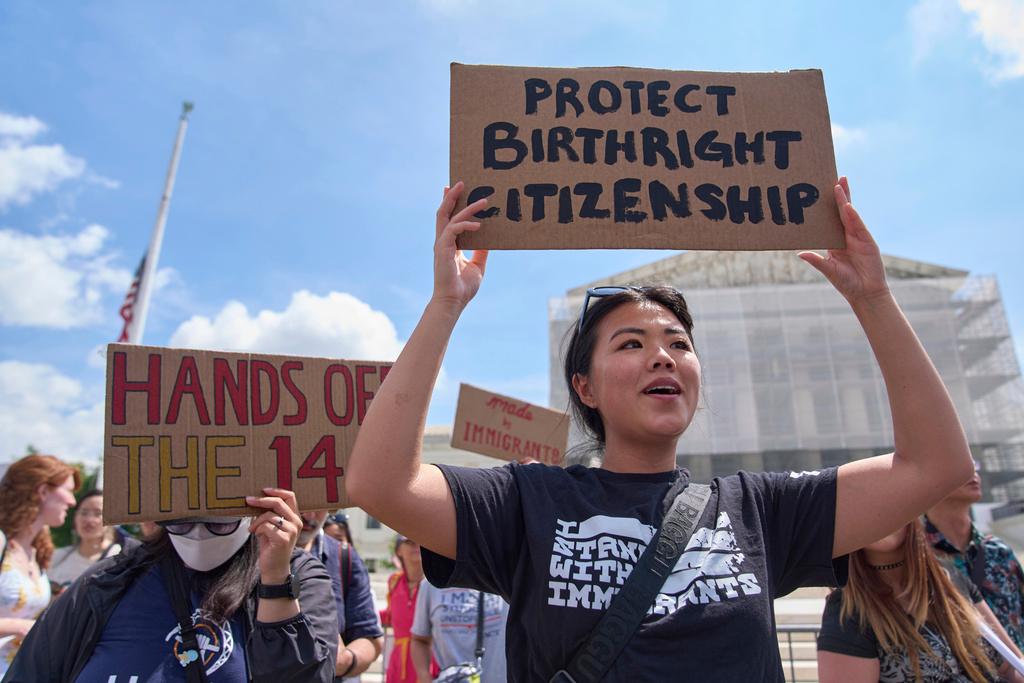
Examining the Supreme Court Ruling on Birthright Citizenship
The recent decision by the Supreme Court, siding with the Trump administration, has introduced a number of tricky parts and tangled issues that have set off debates across legal and political circles. By limiting the power of federal district courts to block executive orders nationwide, the ruling now allows a controversial birthright citizenship executive order to be enforced in certain states. This op-ed explores the fine points of the decision, how it affects families and communities, and what the future may hold for American citizenship rights.
This situation brings up a series of confusing bits that many find overwhelming. In this analysis, we will take a closer look at the policy’s twists and turns, look into its impact on different states, and consider its broader implications for the law and society. While the language of legal rulings can sometimes seem intimidating, breaking down the multiple layers can help us figure a path through the evolving landscape of citizenship law.
Understanding the Supreme Court’s Decision and Its Challenging Aspects
The latest ruling focuses on a key legal debate: whether federal district judges have the authority to halt an executive order on a nationwide scale. The decision effectively limits the scope of these judges to only issuing injunctions within their specific jurisdictions. In doing so, the court has created an environment where the application of the executive order on birthright citizenship depends heavily on geographical boundaries.
For instance, while 22 states along with the District of Columbia have successfully blocked the executive order from taking effect within their territories, 28 states now fall under its purview. This division introduces a nerve-racking level of uncertainty into everyday life. Families and officials in states where the order is enforceable are left trying to make sense of the additional bureaucratic hoops, while those on the other side of the jurisdiction line see a continuation of longstanding practices.
Critics argue that this division is both nonsensical and unfair. Many legal analysts have noted that the decision underscores a puzzling reality: the status of a child’s citizenship could now depend largely on where the birth takes place—an outcome that many believe contradicts the ideal of equal rights for all. This conundrum calls for a deep dive into the underlying legal concepts and the potential long-term impact on individual rights.
Birthright Citizenship: The Policy, Its Conditions, and the Legal Landscape
At the core of the controversy is the executive order signed by President Trump on January 20, which outlines that the federal government will no longer issue citizenship documents—such as Social Security Numbers or passports—to children born on or after February 19, 2025, under certain conditions. Essentially, if a baby is born in the United States to parents who are either unlawfully present or holding only temporary legal status, that child would be denied birthright citizenship.
Key details of the order include the following conditions:
- The baby’s biological mother is unlawfully present in the country, and the biological father is not a citizen or lawful permanent resident.
- Alternatively, if the mother is in the U.S. with only a temporary visa or permit, and the father is not a citizen or legal permanent resident, the baby would also not be eligible for citizenship.
These conditions affect families in several distinct and nerve-racking ways. For instance, couples who are both undocumented or those where one parent is undocumented and the other holds only a temporary permit face a precarious future regarding the automatic grant of citizenship to their offspring.
The language of the executive order itself has been lauded by some for its clarity, while others criticize it for the confusing bits and subtle parts that may lead to inconsistent interpretations. Many legal experts remain unsure of how state-level enforcement will ultimately play out, given the ruling’s reliance on district-specific injunction powers.
Disparities Across States: A Table of Divergent Applications
The bifurcation between states where the order can be enforced and those where it remains blocked creates a tangible patchwork of citizenship rules across the nation. To provide clarity on this matter, see the table below summarizing the geographical split:
| Category | States/Regions |
|---|---|
| Blocked by Injunction |
|
| Enforceable |
|
This table lays out the stark contrast in how the order is applied—a situation that many describe as loaded with issues. In states where the order is enforceable, local and state government agencies now face the challenge of figuring a path through the administrative and legal consequences of issuing birth certificates and other citizenship documents under these new rules.
Impact on Families: The Confusing Bits for Parents and Children
One of the most sensitive parts of this policy relates to how it affects families. Under the new rules, children born to parents who lack legal status or have only temporary permits may not immediately receive the documentation proving they are U.S. citizens. This raises a number of complicated pieces that are both worrying and complicated for many parents trying to secure a stable future for their children.
For some families, the idea that the place of birth could determine a child’s eligibility for citizenship is both confusing and off-putting. This geographic dependency means that two families, similar in every aspect except their state of residence, could face entirely different legal realities—a twist that many argue undermines the equity at the heart of American citizenship.
Highlights of the policy from the perspective of affected families include:
- Uncertainty Over Citizenship Documentation: Parents might find themselves in a situation where even if they plan to abide by federal regulations, their children could still be at risk of not receiving Social Security Numbers or passports.
- State-Level Variances: While a child born in California to undocumented parents is still considered a U.S. citizen, the same child born in Texas could face challenges, leading to a patchwork of rights and benefits based only on geography.
- Administrative Challenges: Government agencies in the 28 states where the order is enforceable will now have the daunting task of revising their procedures for issuing birth certificates and other identity documents—a process that is sure to be both intricate and intimidating.
This confluence of factors has led to widespread concern among immigration advocates and legal scholars alike. Many stress that the policy could strain families already dealing with a myriad of challenges, both legal and personal.
Pondering the Legal and Constitutional Questions
Beyond the immediate practical impacts, the Supreme Court’s ruling opens up a host of broader constitutional debates. Critics argue that allowing the enforcement of this policy by leveraging state lines infringes upon the principle of equal protection under the law. They worry that this segmented approach could lead to a two-tier citizenship system where rights and benefits are not equally accessible by all citizens, depending on where they live.
Legal experts point to the need for clarity on several key issues, including:
- The definition of “unlawful presence” and temporary visas: Fine shades in the language could lead to varied interpretations that may deepen the already tense situation.
- State versus federal jurisdiction: The decision by the Supreme Court to limit the reach of federal district judges adds another layer of tricky parts. Future cases could require clear demarcations of power between state administrators and federal authorities.
- The potential impact on existing U.S. citizens: While the executive order explicitly states that children born before the specified date remain unaffected, the curious bits of future legal challenges might create uncertainty for other aspects of citizen status, such as documentation renewal and benefit eligibility.
As lawsuits continue to weave through the judicial system, many believe that we have only seen the beginning of a longer legal battle. Until the Supreme Court finally addresses these constitutional questions, families, government officials, and legal experts alike will need to make their way through an environment that is replete with twists and turns.
Political Implications and the Debate Over Equality
The policy has not only legal ramifications; it also raises important political questions, particularly regarding the idea of equality. The ruling suggests that a child’s citizenship could hinge significantly on their geographical locale—a factor that many critics say is completely arbitrary. Such a divide could undermine the fundamental principle that all citizens are created equal under the law.
Prominent voices in the legal community have expressed concern that this policy is a dangerous departure from established norms. For example, some experts note:
- Sovereign Concerns: The decision could lead to scenarios where the federal government pressures states that are not covered by the existing injunctions to implement policies they are not comfortable with, adding undue pressure on state authorities.
- Impact on Community Trust: By introducing clear geographical disparities, the ruling risks eroding trust in both federal and state governments, as people might see their rights as dependent on factors beyond their control.
- Precedent for Future Legal Battles: The court’s willingness to intervene in a controversial executive order highlights underlying tensions and could set a precedent for how future immigration and citizenship policies are shaped and enforced.
These political debates underscore a critical point: while the legal language of the ruling might seem straightforward in some respects, its practical implications are anything but. The order not only impacts legal procedures but also stokes a broader conversation about who gets to call themselves an American—a question that has been contested throughout the nation’s history.
Expert Opinions: Insights from Legal Scholars and Practitioners
Throughout this debate, legal scholars and practitioners have offered a variety of opinions on the ruling. Many have described the outcome as a mixed bag, one that offers some clarity on judicial limits while introducing a host of new challenges for families and state officials.
For instance, Leti Volpp, a law professor at UC Berkeley School of Law, has called the idea of geographically dependent citizenship “completely irrational.” Her comments reflect a broader consensus that the executive order’s conditions create an uneven playing field, punishing some families arbitrarily based on location rather than on objective legal standards.
Similarly, Ming H. Chen, a professor at UC Law San Francisco, warns of the chaotic bits to come. He envisions a landscape where government agencies, businesses, and individuals alike are forced to find their way around conflicting rules and interpretations. According to Chen, the situation is a classic case of tangled issues—the local solutions in some states might not even align with the intended federal policy, leading to further legal disputes.
These expert voices highlight several key considerations:
- The Need for Clear Federal Guidelines: Without uniform standards, the responsibility placed on state officials to interpret and enforce the order could lead to inconsistent and potentially unfair outcomes.
- Long-term Constitutional Debates: The eventual handling of lawsuits concerning the constitutionality of the order could redefine the federal-state balance of power for future policies.
- Role of Judicial Interpretation: As more cases filter through the court system, legal precedent will continue to evolve, underscoring the importance of nuanced judicial interpretation in an already tense environment.
In each of these points, the overarching message is clear: while the ruling resolves one aspect of the legal battle over birthright citizenship, it simultaneously opens the door to an array of unsettled questions, both legal and political.
Future Legal Battles: What Lies Ahead?
With several lawsuits still in the pipeline addressing the broader constitutional issues, the future of this policy remains shrouded in uncertainty. The Supreme Court’s decision did not address whether the executive order itself is constitutional—it merely ruled on the ability of district judges to block it nationwide. This leaves the underlying policy up for further debate in higher courts.
While this particular ruling is a significant moment in the evolution of immigration and citizenship law, it is by no means the final word. Some potential developments include:
- Reexamination of the Executive Order: As new evidence and legal arguments emerge, the Supreme Court may eventually be called upon to review the full merits of the birthright citizenship policy, potentially overturning or reaffirming key aspects.
- State-Level Responses: In states where the order is enforceable, governors and state attorneys general may develop localized policies or guidelines to help clarify the implementation process. These responses could either alleviate or compound the current confusion over who qualifies as a citizen.
- Impact on Future Legislation: With significant public and political debate already underway, there is ample possibility for legislative bodies at both state and federal levels to propose new bills or amendments that either reinforce or counteract the executive order.
These points reinforce that the legal journey is far from over. As more cases work their way up through the judicial system, individuals and families across the country will need to stay informed and prepared for additional changes in policy—changes that could well have ramifications for generations to come.
Practical Advice for Affected Families and Legal Practitioners
Amidst these developments, many families are understandably anxious about where they stand. For those who fall under the conditions outlined by the executive order, practical steps must be taken to manage this uncertain environment. Here are some key pieces of advice for impacted individuals:
- Stay Informed: Regularly follow updates from both local government websites and trusted legal sources. Policies at the state and federal levels are in flux; understanding the latest guidance is essential.
- Consult Legal Experts: For families facing potential challenges, speaking with immigration attorneys or legal aid organizations can help in understanding the specific application of these rules in your jurisdiction. This assistance is particularly important in states where the order is enforceable.
- Document Your Situation: Keep thorough records of any documentation related to your immigration status. In cases of legal disputes, evidence that clarifies your status may prove critical in court.
- Engage with Community Organizations: Local nonprofits and advocacy groups often have the resources and expertise to help families navigate these tangled issues. Their support can be indispensable during times of legal transition.
Legal practitioners, on the other hand, may find it useful to coordinate with state and local agencies to ensure that their interpretations of the executive order are consistent with both judicial rulings and community needs. Table 2 below outlines a set of recommended steps for legal advisors and families alike:
| Step | Action Item |
|---|---|
| 1 | Stay updated on local jurisdiction developments regarding the executive order enforcement. |
| 2 | Engage legal counsel or advocacy groups who are experienced in immigration matters. |
| 3 | Collect and organize documentation that details immigration status and related legal papers. |
| 4 | Monitor local education, healthcare, and employment systems for policy changes that might affect family benefits. |
| 5 | Participate in community forums to share experiences and stay informed on best practices. |
The guidelines provided above are not exhaustive but serve as essential steps to help affected families and legal practitioners make their way through what is undeniably a tense period of legal change.
Understanding the Broader Social and Political Context
This ruling is not occurring in a vacuum. It is part of a broader debate over immigration and citizenship policy in America—a debate that touches on longstanding questions about who belongs and what it means to be an American. The decision by the Supreme Court has therefore sparked discussion in places ranging from local community centers to the pages of national policy debates.
Critics of the executive order point out that it risks relegating citizenship to a matter of state-by-state policy rather than a uniform, national standard. This potential bifurcation raises several problematic issues:
- Geographic Inequity: With citizenship rights potentially varying from one state to another, the notion of national unity is put to the test. Families may find that their rights and responsibilities are inconsistent simply based on where they are born.
- Long-Standing Legal Precedents: The idea that a state’s judicial decisions can override federal policies in such critical matters runs counter to historical traditions in American jurisprudence. This shift could set new precedents with implications far beyond birthright citizenship.
- Societal Divisions: Policies that segregate citizens based on geographic location can exacerbate existing social divides, undermining community cohesion and the principle of equal opportunity for all.
On the other hand, some defenders argue that the executive order adheres to a long-held view that birthright citizenship should not be automatically granted in all circumstances, particularly where parental status might raise questions about long-term residency and contribution to society. However, this faction is met with equally strong counterarguments that dismiss such views as overly simplistic and full of problems.
The social context of this decision is thus layered. It is not solely a matter of interpreting legal texts; it is also a reflection of changing attitudes toward immigration, national identity, and the responsibilities of government at both federal and state levels. Many citizens find themselves caught between these conflicting narratives, trying to make sense of a policy that appears to redefine the very core of what it means to be American.
Government Response and the Role of State Leadership
The Supreme Court ruling has placed state governors and attorneys general in a position where their next moves will be closely observed. In states where the order can be enforced, state leaders are expected to take active steps to implement new protocols regarding citizenship documentation.
Some key considerations for these state officials include:
- Clarifying Documentation Procedures: Officials must work quickly to revise policies around the issuance of birth certificates, Social Security Numbers, and passports in a manner that aligns with federal guidelines while addressing state-specific circumstances.
- Engaging with Affected Communities: Transparent communication is essential. By hosting public forums and information sessions, state leaders can help ease concerns and clarify the practical implications of the policy changes.
- Coordinating with Local Agencies: Seamless coordination between federal, state, and local agencies will be key to ensuring that changes are implemented smoothly. There is a need for strategic planning to steer through the administrative challenges ahead.
- Addressing Legal Uncertainty: As further challenges are brought before the courts, staying abreast of legal developments will allow state officials to adjust policies in real time, ensuring that the state complies with both current and future rulings.
The active involvement of state leadership is not just critical for policy implementation—it is also a test of how effectively government bodies can work together during periods of significant legal transition. In an environment where the rules of citizenship are being reinterpreted, strong, decisive leadership is both essential and greatly anticipated.
Looking at Historical Parallels and the Lessons Learned
The debate over birthright citizenship is not new to American legal history. Similar contentious issues have emerged in the past, forcing the judiciary and the legislative bodies to address conflicting concepts of national identity and equality. Studying these historical precedents can offer valuable insights into how the current turmoil might be resolved.
Past legal battles have taught us several lessons that seem particularly relevant today:
- Importance of Consistency: When rights vary dramatically from state to state, confusion and inequality often follow. Historical cases remind us that a uniform application of citizenship rights underpins national stability and public trust.
- Role of Judicial Review: The judiciary has long served as the guardian of constitutional principles. By reviewing executive orders and legislative acts, the courts have historically helped to delineate the fine points of citizenship and equal protection.
- Impact on Social Cohesion: Policies that appear to divide citizens along geographic lines can have lasting repercussions on societal unity. The lessons of the past underscore the need for careful, balanced measures that address security concerns without undermining the core values of equality.
While history does not provide an exact blueprint for the current scenario, it does reinforce the idea that changes in citizenship laws are among the most sensitive and transformative types of policy shifts. The decisions made now will be remembered as part of a long, winding story of how America defines citizenship and belonging.
The Broader Implications for U.S. Citizenship and Identity
The evolving legal landscape around birthright citizenship has implications that reach far beyond the immediate controversies. At its heart, the policy challenges fundamental assumptions about what it means to be an American. By tying citizenship to specific conditions related to parental status and location, the order disrupts traditional interpretations of national identity.
Key points to consider in this broader debate include:
- Redefining National Membership: Citizenship has always been a badge of belonging, yet the new policy suggests that membership may become conditional, subject to fluctuating legal interpretations and local jurisdictional variances.
- Impact on National Unity: When citizens in one state enjoy full rights while those in another face restrictions, it raises the question of whether a unified national identity can truly exist. This situation could lead to divisions that run deep, affecting everything from political representation to public services.
- Future Legislative Actions: As policymakers and lawmakers digest the implications of the Supreme Court’s ruling, there is a growing consensus that further legislative action will be necessary. Such efforts may aim to restore uniformity and fairness in citizenship law, ensuring that every child born on American soil is entitled to the same rights, irrespective of location or parental status.
These broader discussions signal that the current debate is more than just a legal dispute—it is a reflection of evolving societal values and the perennial struggle to balance security concerns with the ideals of freedom and equality. As such, the ongoing legal battles and political debates are likely to shape the framework of American citizenship for decades to come.
Final Thoughts: Balancing Legal Rulings with Human Rights
Ultimately, the Supreme Court ruling on the birthright citizenship executive order is a reminder of how the law is continually adapting to new challenges. While the decision narrows the scope of federal district courts in issuing nationwide injunctions, it also leaves unresolved a number of peripheral issues that affect the daily lives of American families.
For those who see citizenship as a fundamental, must-have element of one’s identity, the idea that geography could dictate access to rights is both perplexing and unsettling. More than ever, this ruling is prompting legal experts, policymakers, and community leaders to take a closer look at the policies that have long defined what it means to be an American.
As debates continue in courts and public forums, it is critical that all stakeholders—families, legal practitioners, state officials, and legislators—work together to address the challenges posed by these new and confusing bits of law. Only through transparent dialogue, coordinated efforts, and a commitment to fairness can we hope to resolve the tangled issues that have surfaced in the wake of this decision.
In closing, while the Supreme Court’s decision certainly clarifies one aspect of the legal landscape, it also leaves many essential questions unanswered. The future of birthright citizenship in America remains on uncertain ground, with the potential for further legal disputes and policy revisions. Until a final resolution is reached, affected families and their advocates must continue to adapt, remain vigilant, and actively participate in the conversation about what American citizenship should entail in the 21st century.
The road ahead may be filled with nerve-racking twists and unpredictable turns, but it also offers an opportunity to reexamine our legal foundations and renew our commitment to equality and justice for all. The coming months and years will undoubtedly be a time for reflection, advocacy, and proactive legal reform—a period in which the true meaning of belonging in this nation is tested and ultimately defined.
Conclusion: A Call for Unity and Fairness in Citizenship Policies
As we navigate these challenging times, it is essential that we remember the core principles that have long guided our nation. Citizenship should be more than a legal status—it should represent the shared values of fairness, opportunity, and equal treatment under the law. The current debate over birthright citizenship, with all its confusing bits and painful twists, is emblematic of a broader struggle to balance national security, legal consistency, and fundamental human rights.
State officials, legal experts, and community leaders must now work hand-in-hand to smooth out the uneven patches created by the recent ruling. Whether through refined legislative measures, clearer judicial guidelines, or more inclusive public discourse, the aim should be to restore confidence in a system that promises equality regardless of geography.
In the end, the outcome of this legal showdown will not be measured solely by the words written in court opinions, but by the tangible impact on the lives of individuals and families who call this country home. Through concerted effort, decisive action, and unwavering dedication to fairness, we can look beyond the current turmoil to a future where the rights of each citizen are respected and upheld.
It is our collective responsibility to ensure that the measures we adopt in response to this ruling bolster the ideals of justice and unity, rather than undermine them. The legal and political challenges may be intimidating and full of problems, but by working together, we have the power to pave the way for a more inclusive and equitable America.
Originally Post From https://www.kqed.org/news/12046217/what-the-supreme-courts-latest-ruling-means-for-birthright-citizenship
Read more about this topic at
Supreme Court in birthright case limits judges’ power to …
Supreme Court limits nationwide injunctions in birthright case